
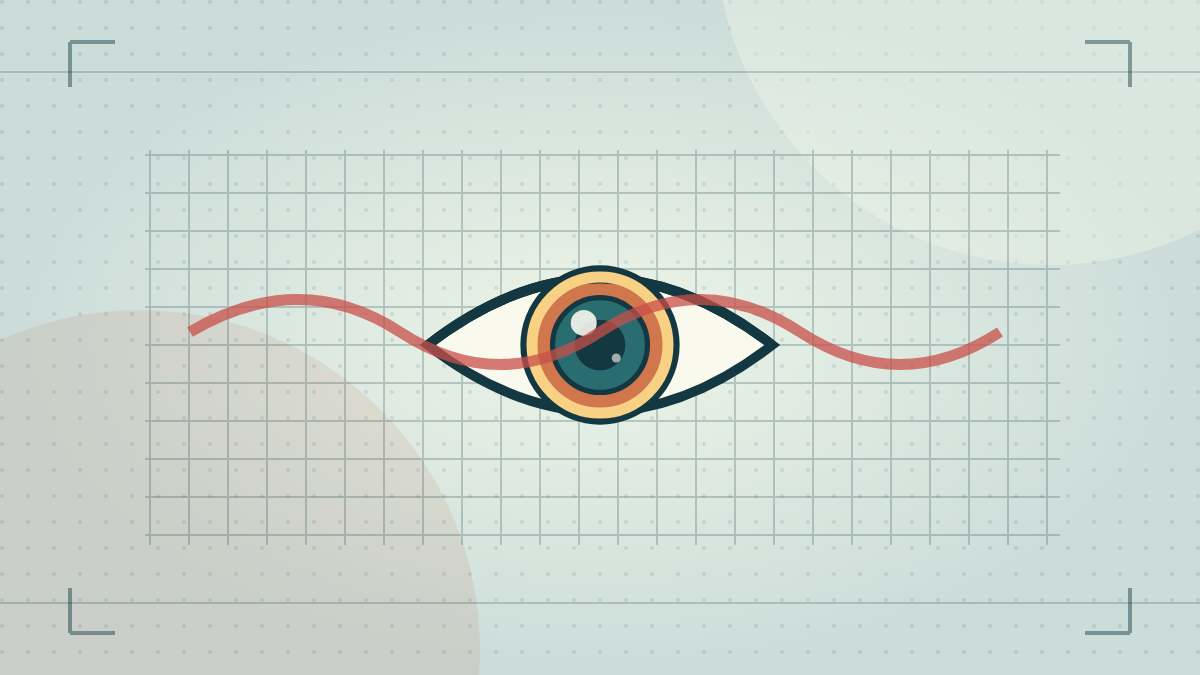
New wavy or missing central vision should be assessed promptly by an eye-care professional.
The center of the picture
Age-related macular degeneration (AMD) affects the macula, the small retinal area used for sharp central detail. Reading, recognizing faces, and seeing straight lines clearly can become harder. Side vision may remain useful even when central vision changes.
There are different forms and stages of AMD. A dilated exam and sometimes retinal imaging help an eye doctor identify what is happening. A home grid or acuity check can notice a change but cannot determine the stage.
Do not wait on a new distortion
If straight lines suddenly appear wavy or a central dark spot appears, arrange prompt assessment. Treatment and monitoring depend on the type of AMD. Ask an eye doctor whether any supplements are appropriate for your specific stage rather than starting them based on a web article.
Common questions
What does an Amsler grid show?
A grid may make a new wavy or missing patch in central vision more noticeable. It is a monitoring aid, not a diagnosis or a substitute for retinal examination. Report new distortion promptly.
Should everyone take AREDS2 vitamins?
No. The National Eye Institute reports benefit for particular stages of AMD, not for everyone and not as general prevention. Ask your eye doctor whether your diagnosis and medical history make the formula appropriate.
For persistent changes or symptoms, arrange an eye examination. Seek urgent medical care for sudden vision loss, a new curtain or shadow, many new floaters with flashes, severe eye pain, an eye injury, or sudden double vision.
Sources & further reading
This is general educational content based on the linked sources. It is not a diagnosis, prescription, or a substitute for advice from your own eye-care professional. See an error? Contact us.