20/40 is a distance clarity measure, not a diagnosis or a glasses prescription.
The simple interpretation
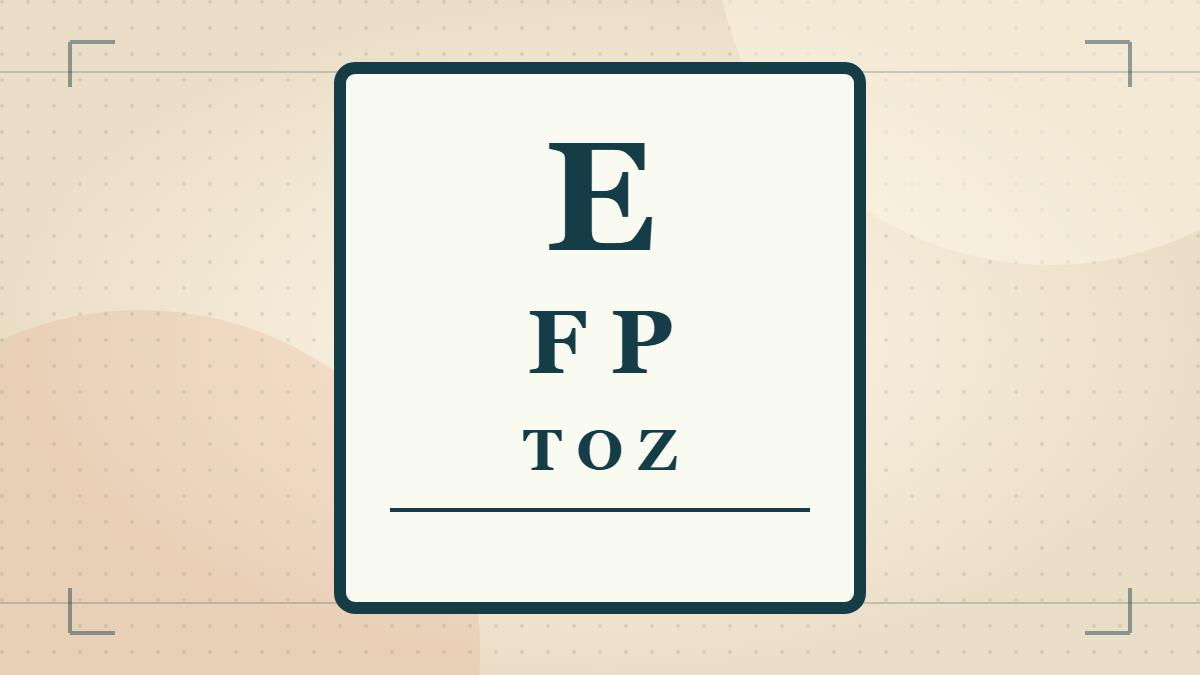
A 20/40 result means that, under that test’s conditions, you identified at 20 feet a line that a person with standard 20/20 acuity could identify at 40 feet. The larger bottom number means the line is larger. It does not tell you why the image is less clear.
A refractive error, dry eye, tiredness, or an eye condition can all affect an acuity reading. Comparing right and left eyes separately can help you notice a difference, but a proper exam is needed to understand it.
Using an at-home result
Keep the same screen, measured distance, lighting, and glasses between repeat checks. If the lower result repeats, one eye differs, or you notice a new change in everyday life, book an eye exam. Sudden vision loss calls for urgent care.
Common questions
Does 20/40 automatically mean I need glasses?
No. A refractive error is one possible explanation, but dry eye, test conditions, and eye disease can also change acuity. An eye exam is needed to determine the cause and whether a prescription would help.
Can I compare a home 20/40 with a clinic result?
Only cautiously. Different charts, viewing distances, lighting, and correction can lead to different readings. Use a home check mainly to notice a repeated change under the same setup, then share that observation with your eye-care professional.
For persistent changes or symptoms, arrange an eye examination. Seek urgent medical care for sudden vision loss, a new curtain or shadow, many new floaters with flashes, severe eye pain, an eye injury, or sudden double vision.
Sources & further reading
This is general educational content based on the linked sources. It is not a diagnosis, prescription, or a substitute for advice from your own eye-care professional. See an error? Contact us.