20/20 describes distance visual acuity under test conditions; it does not mean every part of eye health is normal.
Reading the fraction
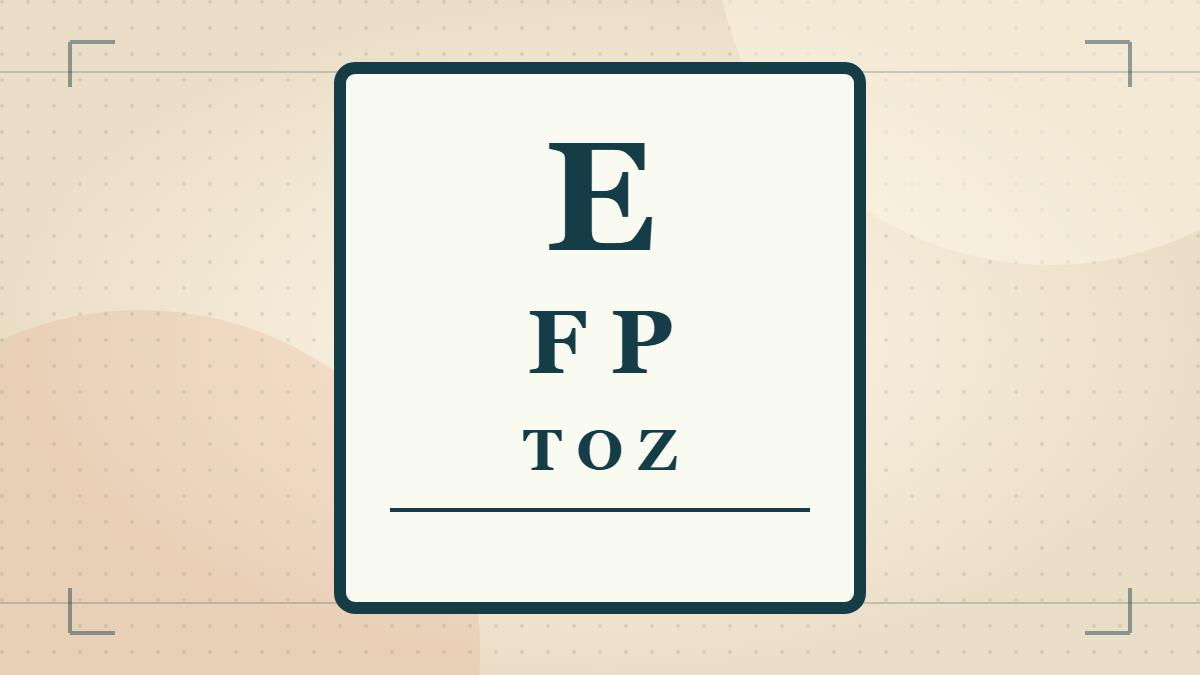
In a Snellen-style result, the top number is the viewing distance and the bottom number refers to the distance at which a person with standard acuity could identify that same line. A 20/20 result means you read at 20 feet what standard acuity reads at 20 feet.
The fraction measures the clarity of central distance vision for a particular test. It does not check eye pressure, retinal health, peripheral vision, or how comfortably you focus up close.
Why conditions matter
Lighting, chart design, viewing distance, correction, and guessing can shift a result. Vision Checker offers an approximate, calibrated screening equivalent from 1 meter; it is not a clinical examination. If your vision has changed, arrange a professional exam even if a home result looks reassuring.
Common questions
Is better than 20/20 possible?
Yes. Some people can identify a smaller chart line, such as 20/15, under test conditions. The number still describes one aspect of distance acuity; it does not make an eye examination unnecessary.
Can someone have 20/20 and an eye disease?
Yes. Early eye disease may not affect the small central letters used on an acuity chart. A comprehensive eye exam assesses more than sharpness, which is why symptoms and risk factors matter even when a chart score is strong.
For persistent changes or symptoms, arrange an eye examination. Seek urgent medical care for sudden vision loss, a new curtain or shadow, many new floaters with flashes, severe eye pain, an eye injury, or sudden double vision.
Sources & further reading
This is general educational content based on the linked sources. It is not a diagnosis, prescription, or a substitute for advice from your own eye-care professional. See an error? Contact us.